Protecting Your Freedom to Read
If you’ve ever wondered why libraries carry books you don’t agree with, host programs you wouldn’t attend, or defend access to controversial ideas, you’re not alone. Intellectual freedom—the term libraries use to describe freedom of choice—can sound complicated and academic. But it’s actually a pretty simple idea, and it's at the heart of how libraries work. Here are some of the questions we hear most often at Burlington Public Library.
Q: What is intellectual freedom?
Intellectual freedom is the right to seek out information and ideas without restriction—and the responsibility to allow others to do the same. It’s recognized as a basic human right and is essential to a healthy democracy. At its core, it means you get to decide what you read, watch, or explore, and so does everyone else.
Q: Is intellectual freedom the same as free speech?
Not quite. Free speech is about the right to express ideas. Intellectual freedom includes that, but it also focuses on access and choice: the ability to find, read, and explore information from many points of view. Public libraries are especially concerned with access.
Q: Why does intellectual freedom matter in a democracy?
Democracy is a system of governance and decision-making where power is shared by the people. To work effectively, people in a democracy need to be informed, curious, and willing to think critically. When access to information is limited, people tend to become narrow-minded. Viewpoints shrink, polarization between conflicting ideas grows, and learning stops. Encountering ideas that challenge our beliefs can be uncomfortable, but it’s also how we grow, understand others, and find common ground. That common ground is essential for democracy.
Q: What role do public libraries play in intellectual freedom?
Public libraries have a special role in protecting intellectual freedom. As free public spaces open to everyone, libraries provide access to a wide range of information, ideas, and experiences—many of which people might not easily find or afford on their own. Libraries don’t tell you what to think; they give you the tools to think for yourself.
When people are exposed to a variety of ideas and people thanks to their local library, they develop empathy for perspectives different from their own. Combined with learning opportunities and social interactions, this helps build a more connected community.
Here at BPL, this work is guided by our Intellectual Freedom Policy, which helps staff make thoughtful, consistent decisions about books and other items we loan, as well as the programs and services we offer. If you’re curious, the policy offers more detail about how libraries balance access, choice, and responsibility.
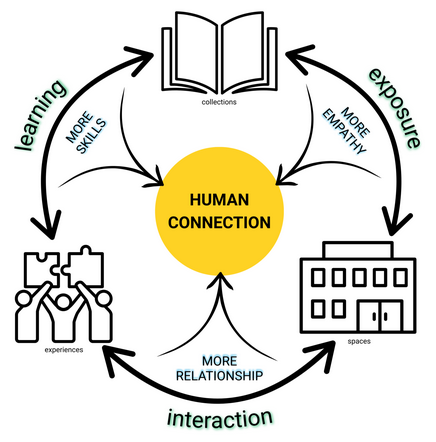
The Library's books, spaces, and programs create opportunities for learning, conversation, and exposure to new ideas.
Together they build empathy, skills, and relationships—all crucial elements for a connected community.
Q: Does offering a book or program mean the library agrees with it?
No. Providing access doesn’t equal endorsement. Libraries aim to offer a wide range of ideas across their collections and programs, not to promote one belief over another. You’re free to take part, or not.
Q: What about books that contain outdated or harmful language?
Some older books reflect attitudes or language that are harmful today. That harm is real, and it’s okay to avoid material that feels upsetting. At the same time, erasing those works can make it harder to understand history and learn from it. Libraries trust readers to approach materials in context and with critical thinking, rather than pretending uncomfortable parts of the past didn’t exist.
Q: Can libraries remove books if people complain?
Libraries take concerns seriously, but the bar for removing material is very high. Requests to remove items go through a formal review process that considers things like context, purpose, and relevance, not just personal opinions. Most challenges come down to individual beliefs, and one person’s experience doesn’t outweigh everyone else’s right to choose.
Q: Has social media changed how people think about this?
Yes. Algorithms often shape what we see online by showing us information that matches what we already believe and less of what doesn’t. Over time, this can narrow our perspective and make it feel normal to encounter only familiar ideas. Libraries are one of the few places left where ideas aren’t filtered just for you.
Q: What about kids? Do parents get a say?
Absolutely. Parents and caregivers are encouraged to guide their children’s library use and set family boundaries. Public libraries support families by offering a wide range of materials, but they don’t replace parental decision-making. What’s right for one family won’t be right for another.
Q: Are there limits to intellectual freedom? What about hate?
Yes, there are limits. Libraries do not provide platforms for hate or discrimination. Canadian laws clearly define hate speech, and libraries follow those laws. Respectful exchange of ideas is welcome; harassment or disruption is not. BPL outlines our expectations in our Customer Experience Standards.
Q: Why does all of this matter right now?
Challenges to books and ideas are increasing, especially around topics like gender, identity, and history. That makes public education about intellectual freedom more important than ever. Libraries exist to support curiosity, learning, and informed choice, even when that’s uncomfortable.
Wrapping It Up
Intellectual freedom isn’t about liking everything on the shelf. It’s about trusting people to choose for themselves. Libraries stand for access, context, and critical thinking, not censorship. In a world that’s increasingly divided, that shared commitment matters more than ever.
If you’re curious, ask questions, read widely, and remember: the freedom you want for yourself only works if you’re willing to extend it to others, too.
Want to learn more?
BPL’s Collections & Resources Policy explains how we review and manage our collections.